The Role of GitOps in Modernizing COBOL Applications in AWS
Modernize COBOL workload deployment with GitOps and ArgoCD. Todd Bernson, CTO, demonstrates how enterprises can automate COBOL application rollouts in Kubernetes, ensuring consistency, reliability, and faster deployments while reducing manual effort and deployment risks.

Todd Bernson
2025-02-13

Mainframe-based COBOL applications are still integral to many enterprise workflows, yet they lack the agility and automation required in modern IT environments. Traditional deployment methods for COBOL applications are manual, slow, and error-prone, making it difficult to iterate quickly and maintain reliability.
GitOps, powered by tools like ArgoCD, provides a modern approach to managing COBOL workloads in Kubernetes environments. By adopting a declarative, version-controlled deployment strategy, enterprises can automate COBOL application rollouts, ensure consistency, and simplify infrastructure operations.
This article explores how GitOps and ArgoCD can streamline COBOL-based workload deployment and management in Kubernetes.
What is GitOps?
GitOps is a declarative approach to managing infrastructure and applications using Git as the single source of truth. In a GitOps workflow:
- Developers commit changes to a Git repository.
- ArgoCD continuously monitors the repository for changes.
- Kubernetes deployments are automatically updated to match the repository state.
By integrating COBOL-based workloads into a GitOps pipeline, enterprises can achieve faster deployments, automated rollbacks, and improved observability.
How GitOps Helps Modernize COBOL Applications
Legacy COBOL applications often require batch processing jobs that operate on structured data formats (CSV, JSON, etc.). Deploying and managing these workloads manually in Kubernetes can be complex. ArgoCD automates this process, providing:
Automated Deployments: Any changes in Git automatically trigger updates in Kubernetes.
Version Control & Auditability: Every change is tracked, making rollbacks seamless.
Consistency & Reliability: Eliminates manual deployment errors by ensuring declarative state enforcement.
GitOps Workflow for COBOL Application Deployment
- Developers define COBOL application manifests in Git.
- ArgoCD monitors the repository and detects changes.
- Kubernetes updates automatically, ensuring the COBOL job is always in the desired state.
- Rollback occurs automatically if a deployment fails, ensuring stability.
Step-by-Step Implementation with ArgoCD
1. Deploying ArgoCD in Kubernetes
To install ArgoCD in an EKS cluster, run:
kubectl create namespace argocd
kubectl apply -n argocd -f https://raw.githubusercontent.com/argoproj/argo-cd/stable/manifests/install.yaml
Expose the ArgoCD UI with:
kubectl port-forward svc/argocd-server -n argocd 8080:443
Access the UI at https://localhost:8080.
2. Defining a COBOL Processing Job in Kubernetes
A COBOL-based Kubernetes CronJob processes structured data and runs at scheduled intervals. Below is an example Kubernetes manifest:
apiVersion: batch/v1
kind: CronJob
metadata:
  name: cobol-processing-job
spec:
  schedule: "0 * * * *"
  jobTemplate:
    spec:
      template:
        spec:
          containers:
          - name: cobol-processing
            image: myrepo/cobol-transform:latest
            volumeMounts:
            - name: efs-storage
              mountPath: /data
          restartPolicy: OnFailure
          volumes:
          - name: efs-storage
            persistentVolumeClaim:
              claimName: efs-claim
This job:
- Runs a COBOL-based transformation script on CSV data.
- Persists processed data in an EFS-mounted volume.
- Executes on a scheduled interval, orchestrated by Kubernetes.
3. Configuring ArgoCD to Manage COBOL Deployments
Define an ArgoCD Application manifest that links to a Git repository storing the COBOL deployment YAML files.
apiVersion: argoproj.io/v1alpha1
kind: Application
metadata:
  name: cobol-app
  namespace: argocd
spec:
  destination:
    namespace: default
    server: https://kubernetes.default.svc
  source:
    repoURL: "https://github.com/myrepo/cobol-k8s.git"
    path: "deployments"
    targetRevision: HEAD
  syncPolicy:
    automated:
      prune: true
      selfHeal: true
This ArgoCD configuration:
- Automatically deploys changes from Git to Kubernetes.
- Ensures the live environment matches Git state (self-healing).
- Removes outdated deployments when manifests are deleted from Git.
4. Visualizing COBOL Workload Deployments in ArgoCD
Once the deployment is managed by ArgoCD, we can observe rollout progress in the UI.
ArgoCD UI Showing COBOL Job Deployment
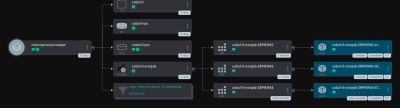
ArgoCD provides:
Live tracking of COBOL batch jobs.
Deployment history for easy rollbacks.
Automatic synchronization with Git.
Business & Technical Benefits of GitOps for COBOL Workloads
By integrating GitOps principles into COBOL workload management, enterprises gain:
Faster Time-to-Market: Deploy COBOL-based jobs in minutes, not days.
Greater Reliability: Version-controlled, rollback-capable infrastructure.
Operational Efficiency: Reduces manual intervention & deployment risks.
Scalability: GitOps enables consistent deployments across environments.
Final Thoughts
Legacy COBOL applications don’t have to remain static. By adopting GitOps with ArgoCD, enterprises can automate deployment, enhance reliability, and accelerate modernization efforts. This approach bridges the gap between legacy systems and cloud-native infrastructure—without requiring costly rewrites.
Read More
View all posts
AI/ML
Why Enterprise AI Must Be Application-Led, Not Agent-Led
A deep dive by Todd Bernson, CTO and Chief AI Officer, on why enterprise AI systems should be architected as application-led, deterministic platforms with embedded agentic AI—not fully autonomous agents. This article explains how API-first, governed, multi-channel architectures deliver higher reliability, compliance, scalability, and business value in real-world Fortune-500 environments.
Todd Bernson
2025-12-02

AI/ML
Application-First Agentic AI
Application-first agentic AI is emerging as the only reliable path to real enterprise ROI. In this in-depth analysis, Todd Bernson, CTO & CAIO, breaks down why most generative AI initiatives stall in production—and how disciplined enterprise architecture, deterministic workflows, and narrowly scoped AI agents can finally unlock repeatable business value. Using a real sprint-intelligence system as a case study, the article shows how organizations can combine serverless engineering, structured orchestration, and constrained LLM reasoning to reduce reporting effort, increase trust, eliminate hallucinations, and deliver actionable insights across engineering, operations, compliance, and customer experience.
Todd Bernson
2025-11-28

AI/ML
Why 95% of AI Projects Fail and How to Be Among the 5% That Succeed

Lee Hylton
2025-08-22