The Future of AI-Augmented Legacy Systems: What Enterprises Need to Know
Enhance legacy COBOL workloads with AI-powered automation. Todd Bernson, CTO, explores how enterprises can integrate AWS Lambda, Amazon Bedrock, and Kubernetes to augment COBOL-based data processing with real-time AI insights, improving efficiency, scalability, and decision-making.

Todd Bernson
2025-02-20
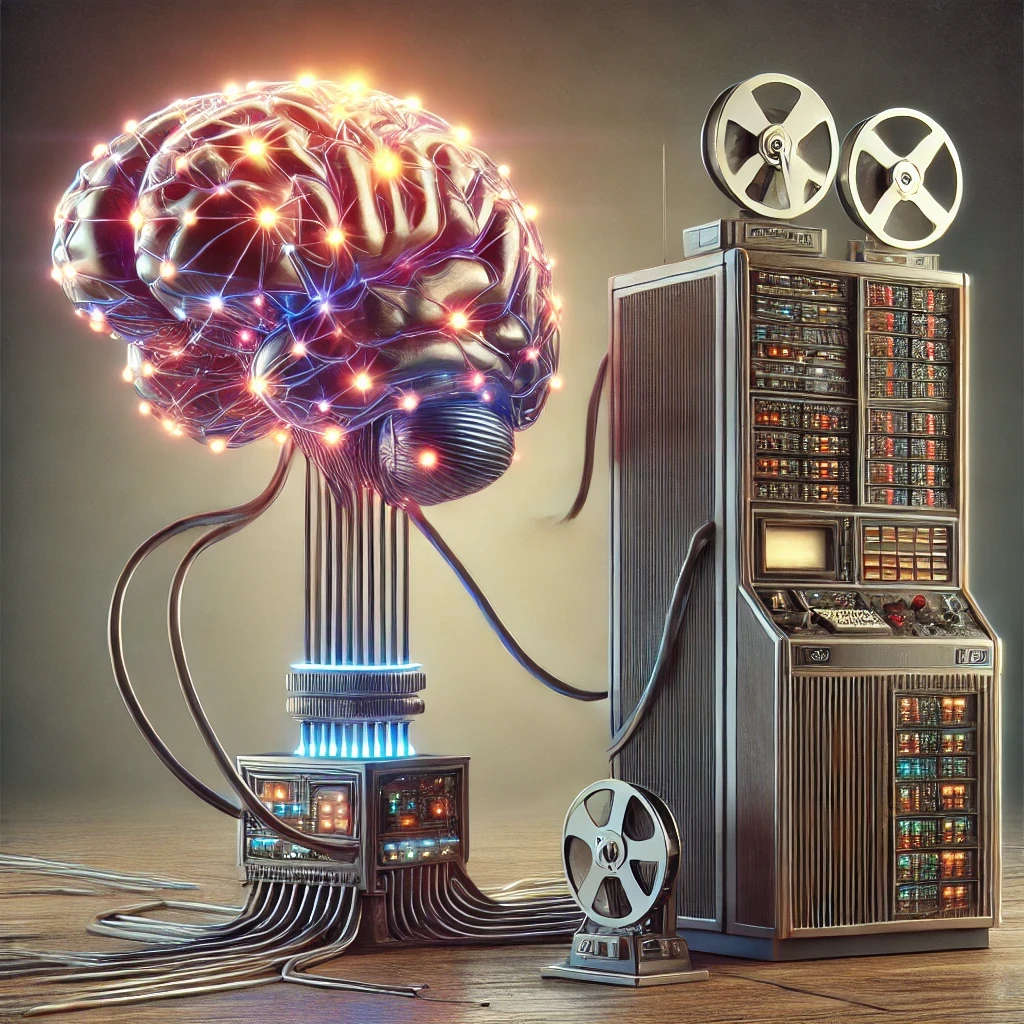
Enterprises have relied on legacy IT infrastructures—including COBOL-based mainframes—for decades. These systems, while stable, struggle to keep pace with modern AI-driven automation, real-time analytics, and cloud-native efficiency.
As AI and cloud computing evolve, enterprises must integrate AI augmentation into their legacy systems to remain competitive. This article explores how AI-driven augmentation is transforming legacy IT, the business impact of AI-powered automation, and a practical AWS Lambda function that enhances COBOL-based data processing.
AI-Augmented Enterprise Workflows: The Future of IT
How AI Transforms Enterprise IT
The integration of AI and automation allows enterprises to:
Enhance legacy data processing with real-time insights.
Automate COBOL-based workflows using AI-powered decision-making.
Improve operational efficiency by reducing manual intervention.
AI-Driven vs. Traditional Enterprise Workflows
| Feature | Traditional Legacy Systems | AI-Augmented Systems |
|---|---|---|
| Data Processing | Batch-based, manual validation | AI-driven real-time analysis |
| Scalability | Limited, hardware-bound | Elastic, cloud-native |
| Automation | Manual workflows | AI-powered decision-making |
| Business Insights | Static reports, slow updates | AI-enhanced real-time analytics |
By embedding AI into legacy infrastructure, enterprises can unlock automation, reduce costs, and enable intelligent decision-making.
AI-Augmented IT: Key Areas of Impact
1. Intelligent Data Processing for Legacy Workloads
Traditional COBOL-based batch processing lacks real-time AI-driven enhancements. AI models can:
- Extract business context from unstructured legacy data.
- Identify patterns in structured mainframe datasets.
- Automate categorization and anomaly detection in COBOL-processed transactions.
2. Automating Legacy Decision-Making
AI-powered decision engines can:
- Augment COBOL-based workflows by recommending automated actions.
- Reduce operational overhead by eliminating manual reviews.
- Improve data accuracy using LLM-driven enrichment.
3. AI-Powered Modernization: The AWS Approach
AWS provides a scalable and secure AI ecosystem that seamlessly integrates with legacy systems.
- AWS Lambda processes COBOL-transformed data.
- AWS SageMaker applies AI-driven analysis.
- AI-enriched insights are written back to Amazon S3 for reporting.
AI-Augmenting COBOL with AWS Lambda & LLMs
To demonstrate real-world AI augmentation, we use an AWS Lambda function to integrate LLM-based insights into COBOL-processed data.
This function extracts business context from COBOL-generated structured data and enriches it using an AI model.
AWS Lambda Function for AI-Augmented COBOL Processing
import boto3
import json
import botocore

# Initialize AWS clients
s3 = boto3.client('s3')
bedrock = boto3.client('bedrock-runtime')

def lambda_handler(event, context):
    bucket_name = "cobol-processed-data"
    input_file_key = "structured_data.json"
    output_file_key = "ai_enriched_data.json"

    # Retrieve structured data from S3
    try:
        file_obj = s3.get_object(Bucket=bucket_name, Key=input_file_key)
        data = json.loads(file_obj['Body'].read())
    except botocore.exceptions.ClientError as e:
        return {"status": "Error", "message": f"Failed to retrieve input file: {str(e)}"}

    # AI-driven enrichment function using Amazon Bedrock (Claude model)
    def enrich_data(record):
        prompt = f"Enhance this transaction description: {record['description']}"
        try:
            response = bedrock.invoke_model(
                modelId="anthropic.claude-3-sonnet-20240229-v1:0",
                body=json.dumps({"prompt": prompt, "max_tokens": 100})
            )
            response_body = json.loads(response['body'].read())
            record['ai_enhanced_description'] = response_body['completion']
        except Exception as e:
            record['ai_enhanced_description'] = f"AI enrichment failed: {str(e)}"
        return record

    # Apply AI enrichment to all records
    enriched_data = [enrich_data(record) for record in data]

    # Save AI-enriched data back to S3
    try:
        s3.put_object(Bucket=bucket_name, Key=output_file_key, Body=json.dumps(enriched_data))
    except botocore.exceptions.ClientError as e:
        return {"status": "Error", "message": f"Failed to save enriched data: {str(e)}"}

    return {"status": "Success", "message": "AI enrichment complete"}
How This Works:
- COBOL-transformed structured data is stored in Amazon S3.
- AWS Lambda retrieves, processes, and enriches data with AI.
- AI-generated insights are stored back in S3 for business reporting.
The Business Case for AI-Augmented Legacy IT
Why Enterprises Should Invest in AI-Augmented Systems
Competitive Advantage: AI-powered automation improves decision-making and efficiency.
Cost Savings: Reduces manual labor costs while enhancing data processing speed.
Scalability & Agility: AI-enhanced systems can adapt to real-time data and scale dynamically.
Final Thoughts
- AI is not replacing legacy systems—it’s making them smarter.
- By embedding AI into legacy workflows, enterprises unlock automation, efficiency, and intelligence.
- Kubernetes, AWS Lambda, and LLMs are the future of enterprise IT modernization.
AI-augmented legacy systems aren’t just the future—they’re already here. Enterprises that embrace this transformation will thrive in the next era of intelligent IT.
Read More
View all posts
AI/ML
Why Enterprise AI Must Be Application-Led, Not Agent-Led
A deep dive by Todd Bernson, CTO and Chief AI Officer, on why enterprise AI systems should be architected as application-led, deterministic platforms with embedded agentic AI—not fully autonomous agents. This article explains how API-first, governed, multi-channel architectures deliver higher reliability, compliance, scalability, and business value in real-world Fortune-500 environments.
Todd Bernson
2025-12-02
AI/ML
Application-First Agentic AI
Application-first agentic AI is emerging as the only reliable path to real enterprise ROI. In this in-depth analysis, Todd Bernson, CTO & CAIO, breaks down why most generative AI initiatives stall in production—and how disciplined enterprise architecture, deterministic workflows, and narrowly scoped AI agents can finally unlock repeatable business value. Using a real sprint-intelligence system as a case study, the article shows how organizations can combine serverless engineering, structured orchestration, and constrained LLM reasoning to reduce reporting effort, increase trust, eliminate hallucinations, and deliver actionable insights across engineering, operations, compliance, and customer experience.
Todd Bernson
2025-11-28

AI/ML
Why 95% of AI Projects Fail and How to Be Among the 5% That Succeed

Lee Hylton
2025-08-22